Discipline Over Motivation: Building Unbreakable Habits
If you’ve ever trained in martial arts or even tried to stick to something challenging, you’ll know motivation is unreliable. It can be an initial spark that gets you to the gym, or whatever your interest is in the first place, but it won’t necessarily keep you there.
See, motivation can fade, whereas discipline endures.
Every modern athlete knows this truth: the secret to mastery isn’t in feeling ready; it’s in showing up, even on those days you don’t want to.
Current undisputed heavyweight champion Oleksandr Usyk recently said in an interview, “I don’t have motivation. I have discipline.” Motivation is good, but discipline is better.”
Or what about the great Georges St-Pierre? Often regarded as one of, if not the, greatest MMA athletes of all time and one of the most disciplined fighters to ever step into the Octagon. GSP openly admits he hates training. He doesn’t wake up excited to get punched in the face or to push through exhaustion. But he does it anyway.
Why?
Because he learnt early that the body follows the mind, not the other way around.
He once said, “If I only trained when I felt strong, I wouldn’t be the champion I am.”
That’s the difference between being motivated and being disciplined. Motivation is emotional; discipline is habitual. Motivation gets you started; discipline carries you through.
The Discipline Across Warriors from History
Across warrior cultures, this truth has repeated itself for centuries.
In Japan, the samurai called it Shugyō, a word that translates loosely to “austere training” or “discipline through hardship”. It wasn’t just about perfecting technique; it was about forging spirit through repetition, discomfort, and humility. True mastery was not achieved through passion but through patience.
Half a world away, the Spartans practised a similar ideal. At the age of seven, boys entered agōgē, a brutal training system designed to cultivate endurance, loyalty, toughness, and obedience. They were made to face a life of hardship. The Spartan way taught that courage and composure under pressure are the results of endless, disciplined preparation. The Spartan creed ‘He who sweats less in training bleeds more in war’ comes to mind here.
Among the Roman legions, discipline (disciplina) was a literal code of survival. Soldiers trained daily, rain or shine, drilling not for glory but for reliability, because they (and their commanders) knew that in the chaos of battle, routine and discipline kept men alive when fear and fatigue took hold; the difference between holding a formation and staying composed came down to discipline.
Even the Shaolin monks of China approached discipline as a form of enlightenment. Through years of meditative repetition, strikes, stances, meditation, etc., they learnt that physical mastery was the gateway to spiritual freedom.
As the saying goes, “Motivation gets you going; discipline keeps you growing.”
When Motivation Fades
We all have those days when you hit the snooze button, or you’re supposed to work but end up mindlessly scrolling. Sometimes you can justify it by saying you’ll do it tomorrow. Today is a day off.
But for many (and I include myself in this category), once you lose a routine, one day becomes 2, and two can become 3, and so on until you stop doing it altogether.
In times like that, I’m always reminded to start small and make a habit out of it. Even if it’s only 5 minutes, say, of writing in the morning. I would rather only do 5 minutes than none at all and trust that the effort compounds.
After all, we’re not trying to win one big battle; we’re trying to create a habit of a lifetime.
Lessons to Apply
Here are three practices martial artists use to stay consistent, even through slumps:
1. Ritual Over Mood - Build a routine that doesn’t rely on “feeling it”. Your body should know what to do before your mind can talk you out of it.
2. Track the Streak - Don’t aim for perfect. Aim for consistency. One skipped day easily becomes two, and that’s how you lose the rhythm.
3. Return to the Why - Discipline without purpose leads to burnout. Keep your why visible. Write it down, say it and embody it.
Why This Matters
Motivation may start your journey, but discipline sustains it. It’s not about intensity; it’s about consistency, and consistency, over time, becomes character.
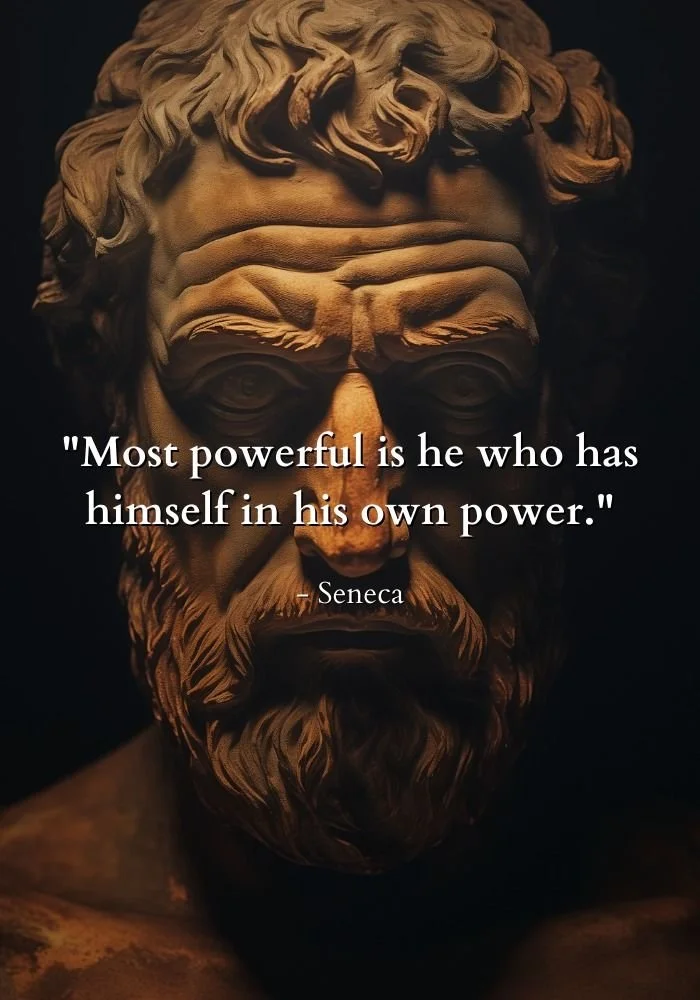
Seneca Quote on Discipline
Our goal should be to keep showing up, even when the spark’s gone, because that’s where transformation truly happens.
Until next time, keep fighting to flourish. Oss. 🥋